


Our story begins
WHAT WE DO
For over 33 years, Aerobiology Research Laboratories (ARL) has been dedicated to providing accurate pollen and spore forecasts to help Canadians manage environmental allergies. We are Canada’s sole provider with a network of actual pollen and spore sampling stations, collecting daily air samples for precise analysis. This unique capability ensures the reliability of our forecasts.
Aerobiology Research Laboratories: Canada’s Aeroallergen Network
30 Monitoring Stations: Strategically placed across Canada’s most populated and biodiverse regions.
Proprietary Technology: We use custom-redesigned rotation impaction samplers for daily, precision collection.
Expert Analysis: All samples are processed by specialized lab staff with over 15 years of experience each to calculate exact particles per cubic meter.
Data-Driven Insights: Our massive data warehouse tracks historical and real-time trends to power accurate forecasts and client research.
Access our 2026 pollen and spore forecasts through the following resources
HOW WE DO IT
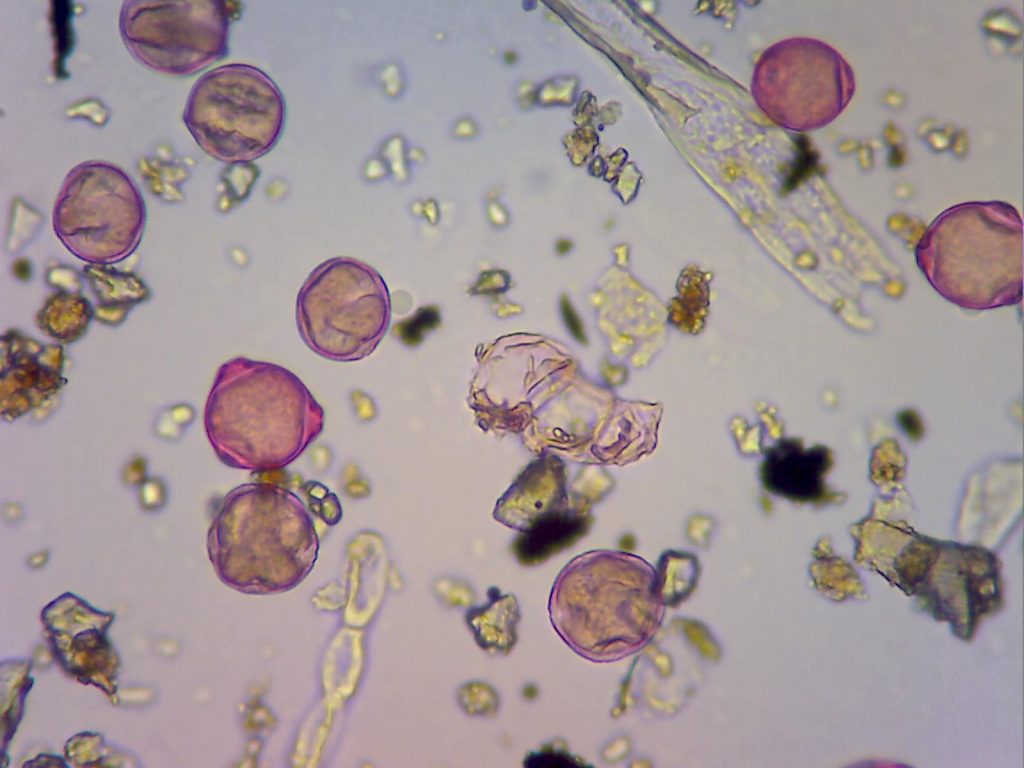
Utilizing innovative ARL rotation impaction samplers, samples are collected daily and then sent to our lab for analysis. There is no other method in the marketplace that is even close to as accurate as microscopic analysis.
Our highly trained laboratory staff then analyze these samples, identifying and counting over 80 pollen and spore types from across Canada. This direct, empirical approach to data collection and modelled pollen and spore forecasting distinguishes ARL from other international providers. While our forecasts are on average 80% accurate over the season, our competitors whose reliance on weather variables only and questionable modelling using satellite technology results in accuracy rates below 38% for pollen and spore forecasts.
Aerobiology Research Laboratories (ARL) provides highly accurate pollen and spore forecasting, achieving an
+0%
accuracy rate
through daily collection and analysis of air samples from 30 Canadian monitoring stations. Our database contains daily counts from all 30 stations with up to 34 years of data from each site.
Advancing science and patient care
WHY WE DO IT
More than 9 million Canadians experience seasonal allergies. We employ rigorous scientific methods to determine pollen and spore concentrations, measuring particles per cubic meter of air through daily analyses. Our extensive and comprehensive data warehouse, spanning nearly 34 years, allows for precise querying and summarization of current and historical allergen levels. This robust database supports crucial research, pollen and spore forecasting, and provides essential data to our clients, including pharmaceutical companies, researchers, and individuals managing allergies.
IMPROVING YOUR QUALITY OF LIFE
33 Years of Precision: Data That Helps You Breathe Easier
For over three decades, Aerobiology Research Laboratories has been the gold standard in aeroallergen data. Our meticulously gathered pollen and spore counts are more than just numbers—they are the engine behind life-changing medical research, advanced asthma treatments, and accurate public health forecasting.
Why Our Data Matters
- Empowering Individuals: We help you reclaim your outdoor life by providing the insights needed to manage your symptoms effectively.
- Scientific Rigor: Our data fuels the development of new medications and drives global allergy research.
- Unmatched Accuracy: While other services offer questionable accuracy (sometimes below 38%), we provide the precision you can trust.
Where to Find Our Forecasts
Get the most reliable data in Canada with our Allergy Sufferers App and through our trusted partners on The Weather Network
Our Team
Questions about services
Frequently asked questions
Here you’ll find answers to common questions about aeroallergen monitoring, pollen and spore forecasting, and our research services.
What is aerobiology?
Aerobiology is the study of airborne biological particles such as pollen and fungal spores. These particles, often called aeroallergens, can affect allergies, asthma, and overall respiratory health.
How does Aerobiology Research Laboratories collect its data?
We collect daily outdoor air samples from a network of pollen and spore monitoring stations. These samples are analyzed in our laboratory using standardized scientific methods to ensure accurate results.
Why are pollen and spore forecasts important?
Accurate forecasts help people understand changing allergen levels, manage allergy symptoms, and make informed decisions about outdoor activities and healthcare planning.
Who uses aeroallergen data?
Our data is used by allergists, researchers, pharmaceutical companies, media organizations, and the public to better understand allergens in the air today.