Climate change is one of the most significant environmental issues affecting our planet. Its impact is far-reaching, influencing ecosystems, human health, and the environment in ways we are only beginning to understand. One of the most concerning effects of climate change is its influence on pollen seasons. As the climate warms, pollen seasons are becoming longer, stronger, and more unpredictable, which can greatly impact allergy sufferers. In this blog, we will discuss how climate change is altering pollen seasons, the effects on allergy sufferers, and why understanding these changes is critical for managing allergies.
How Climate Change is Affecting Pollen Levels
Climate change is causing significant shifts in weather patterns, temperatures, and growing seasons. Warmer temperatures, increased levels of carbon dioxide (CO2), and changing precipitation patterns are all contributing to changes in plant behaviour, including when and how much pollen they release. These shifts are leading to longer, more intense pollen seasons with more pollen in the air which are having a profound effect on allergy sufferers.
Rising temperatures are allowing plants to bloom earlier in the spring, with the pollen season starting sooner. Additionally, plants are producing more pollen and for longer periods, extending the allergy season well into the fall. As a result, individuals who suffer from pollen allergies are now exposed to allergens for a much longer period, intensifying their symptoms and making it more difficult to find relief.
Allergy Season Shifts: Longer and More Intense Pollen Seasons
The most noticeable effect of climate change on pollen seasons is the lengthening and intensifying of the allergy season. As temperatures rise, plants are able to produce more pollen over an extended period. Pollen seasons that once lasted a few months are now stretching for much longer, with some regions seeing pollen levels rise earlier in the spring and persist later into the fall.
The graph below shows the total pollen increase across Canada between 1998 and 2024.
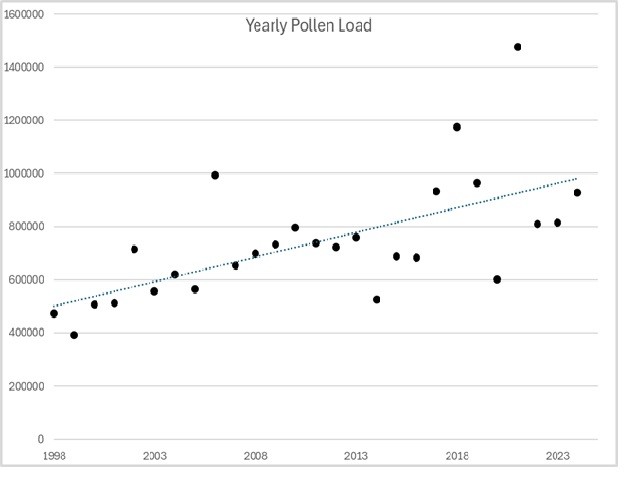
The increased intensity of pollen production is another consequence of climate change. Studies have shown that warmer temperatures can increase the amount of pollen produced by trees, grasses, and weeds. For instance, Birch, one of the most potent allergens, is producing more pollen due to rising temperatures and elevated CO2 levels. This results in a higher concentration of allergens in the air, which leads to worsened symptoms for allergy sufferers.
Warming Climate Effects on Different Types of Pollen
Climate change affects different types of pollen in various ways. Some plants are particularly sensitive to changes in temperature and atmospheric CO2, causing their pollination cycles to shift. For example:
- Tree Pollen: Trees like birch, oak, and alder are among the first to release pollen in the spring. Warmer spring temperatures are causing these trees to bloom earlier, resulting in an earlier start to the allergy season. People sensitive to tree pollen now experience symptoms sooner than in previous decades.
- Grass Pollen: Grass pollen is typically released in late spring and early summer. With higher temperatures and longer growing seasons, grasses are producing more pollen. This not only extends the pollen season but also increases the intensity of symptoms for those allergic to grass pollen.
- Weed Pollen: Ragweed, which is notorious for its allergenic pollen, is particularly affected by climate change. Increased CO2 levels are allowing ragweed to grow larger and produce more pollen. The extended growing seasons and higher pollen concentrations mean that individuals with weed allergies are experiencing longer periods of discomfort, especially in late summer and fall.
Global Warming and the Extended Pollen Season
Global warming is causing shifts in pollen seasons on a global scale. In regions where winters are typically harsh, the arrival of warmer temperatures is triggering an earlier start to the growing season. As a result, trees and plants are releasing pollen sooner, and the pollen season is beginning earlier than it used to. On the other hand, warmer temperatures in the summer are prolonging the pollen season, meaning that individuals are exposed to allergens for a longer period.
In addition to temperature changes, altered precipitation patterns also play a role in the changing pollen season. Some areas are experiencing more rainfall, which can promote the growth of plants and contribute to an increase in pollen production. Meanwhile, other areas are seeing drier conditions, which can cause plants to release more pollen into the air to ensure their survival.
Health Implications: Longer Exposure to Pollen
For allergy sufferers, the extended and intensified pollen seasons caused by climate change are causing more frequent and severe allergy symptoms. Longer exposure to pollen means that people who are sensitive to these allergens are dealing with symptoms for a much longer time. This can lead to increased doctor visits, higher medication use, and a reduced quality of life for many individuals.
In addition to aggravating seasonal allergies, climate change and prolonged pollen seasons can also worsen asthma symptoms and other respiratory conditions. Prolonged exposure to allergens like pollen can trigger asthma attacks, making it more difficult for individuals with pre-existing conditions to breathe comfortably.
How to Manage Allergy Symptoms in Changing Pollen Seasons
Given the increasing length and intensity of pollen seasons, it is important for allergy sufferers to stay ahead of their symptoms. Here are some tips for managing allergies in the face of climate change:
- Stay Informed with Pollen Forecasts: Accurate pollen forecasts can help you plan your day and reduce exposure. By staying informed about the pollen levels in your area, you can take preventive actions such as taking allergy medications early or staying indoors during peak pollen times.
- Take Preventive Medications: Allergy medications work best when taken before symptoms appear. By starting medication in advance, you can reduce the severity of your symptoms.
- Limit Exposure to Pollen: On high pollen days, try to stay indoors, especially during peak pollen times, such as early mornings and evenings. Keep windows closed and use air purifiers to reduce indoor pollen levels.
- Track Symptoms and Triggers: Keeping track of your symptoms and identifying specific pollen triggers can help you understand your allergies better. Using apps or tools that provide personalized pollen data can be an effective way to manage your symptoms.
Conclusion
Climate change is significantly impacting pollen seasons, making them longer, more intense, and harder to predict. As global temperatures rise, allergy sufferers are experiencing extended exposure to allergens, leading to more severe symptoms and a longer duration of discomfort. By staying informed about changes in pollen seasons and using strategies to manage symptoms, individuals can reduce the impact of climate change on their allergies.
For those looking to stay ahead of pollen seasons and better manage their allergies, the Allergy Sufferers app by Aerobiology Research Laboratories offers accurate, real-time pollen forecasts. With personalized updates and data-driven insights, the app helps users track and manage their allergy symptoms more effectively.